Make 1800 a Month Business: Kit, Rates & Sales Tips (UK)
Startup Cost: £50–£300 | Difficulty: Beginner | Time to Start: 7 Days | Business Type: Local
Secondhand 3D printers can produce steering wheel desks that turn a car into a temporary workspace. The model works best when you target mobile trades and sell direct rather than chasing viral products.
Real UK Business Example
Printable Scapes Manchester studio selling personalised 3D-printed desk name plates and office signage to UK businesses. Orders ship within days and custom branding keeps margins healthy on small-batch runs.
What is Make 1800 a Month Business?
A flat printed tray that clips over a steering wheel to hold a laptop or notebook. It suits van drivers, surveyors and anyone who needs a stable surface between jobs.
Video Breakdown
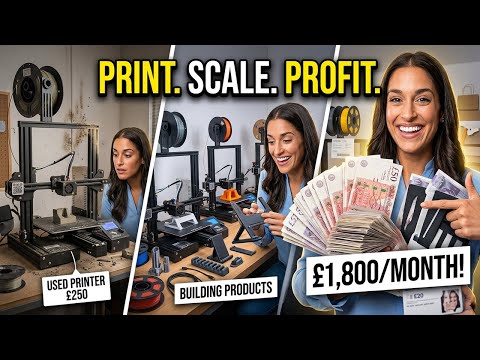
The video walks through buying a used printer, slicing simple tray designs and listing finished units. Watch the full video on YouTube for the full walkthrough.
Key Takeaways
- Used Ender 3 or Prusa Mini printers sell for £80–£180 on UK forums.
- Each tray uses roughly £7–£10 of PETG filament.
- Finished units sell for £18–£25 on local Facebook groups and eBay.
- One printer running evenings can finish 20–25 units a month.
- Custom sizes for specific car models reduce direct competition.
- Printable Scapes keeps margins on small runs by offering quick custom branding.
Startup Costs in the UK
Most builders start under £300 by buying secondhand gear.
| Item | Approx. Cost (UK) | Notes |
|---|---|---|
| Used Ender 3 or similar | £80–£180 | Facebook Marketplace or Gumtree |
| PETG filament (1 kg) | £12–£18 | Enough for 10–12 trays |
| Basic tools | £10–£20 | Pliers, scraper, side cutters |
| Enclosure (optional) | £15–£30 | Useful for ABS prints |
| Domain and basic listing fees | £10–£15 | First three months |
Total outlay lands between £120 and £250 for most people.
Tools & Equipment Needed
- Secondhand 3D printer (Ender 3, Prusa Mini or equivalent)
- PETG or ABS filament
- Basic hand tools and a digital calliper
- Free slicer software (PrusaSlicer or Cura)
- Packaging materials and labels
How to Start
- Buy a tested secondhand printer and run a calibration print.
- Measure steering wheels on common UK vans and estate cars.
- Design three core sizes and test fit on your own vehicle.
- Register as self-employed with HMRC before any sales.
- List finished trays on local Facebook groups and eBay with clear measurements.
- Offer a simple custom-size service for an extra £5–£8.
- Collect payment via bank transfer and ship via Royal Mail or Evri.
Earnings & Scaling
After filament and packaging, profit per unit sits around £8–£12. Twenty units a month gives £160–£240 clear. Adding a second printer can double output if demand holds in your area.
Pros, Cons and Risks
Pros:
- Low entry cost using existing secondhand machines.
- Simple designs that print overnight.
- Repeat orders from the same local trades.
Cons:
- Print failures waste time and filament.
- Local markets can saturate quickly.
- Seasonal demand drops in summer when fewer people sit in vans.
Risks:
- Printer faults after the return window.
- Plastic quality complaints if filament absorbs moisture.
- Platform fees eating into small margins on Etsy.
UK-Specific Tips
- Check local trading standards rules on product safety statements.
- Use clear photos showing the tray fitted in real UK cars.
- Keep records of filament batches for any customer complaints.
- Advertise in regional van driver groups rather than national pages.
FAQ
Do I need a business bank account?
A separate account helps with HMRC records but is not required at the start.
Which filament is best for trays?
PETG gives better impact resistance than PLA and survives warm cars.
How long does one tray take to print?
Most designs finish in four to six hours on a standard Ender 3.
Can I sell on Etsy from day one?
Yes, but start with local groups to test price and fit before paying listing fees.
Conclusion
The model suits anyone with space for a printer and patience for small-batch work. Test three sizes locally before scaling. browse more ideas on MicroBiz365.