Bath Bomb Business — Side Business Guide for the UK
Startup Cost: £50–£250 | Difficulty: Beginner | Time to Start: 7 Days | Business Type: Local
Many UK makers begin with a few moulds and a spare kitchen surface, selling at weekend markets before any shop takes notice.
Real UK Business Example
Lush Handmade cosmetics brand founded in Poole, famous for bath bombs and ethical sourcing. Market stall and kitchen-table makers often start before approaching high-street stockists.
What is Bath Bomb Business?
A bath bomb business means mixing bicarbonate of soda, citric acid and essential oils into small pressed shapes that fizz in the bath. Sales usually start online or at local craft stalls.
Video Breakdown
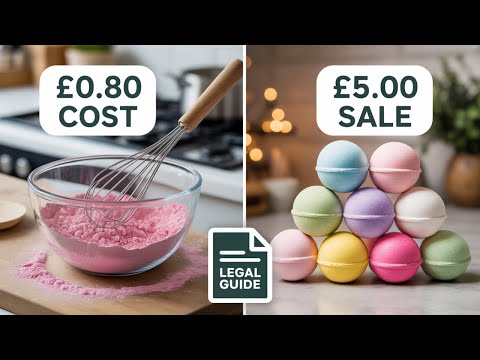
The video walks through ingredient lists, basic mixing ratios and simple mould techniques for a low-cost batch. Watch the full video on YouTube for the full walkthrough.
Key Takeaways
- Basic starter kit costs sit between £50 and £120.
- A clean domestic kitchen works for small runs.
- Four core ingredients plus moulds are enough to begin.
- First batches sell best at local markets or on Etsy.
- Keep records from day one for HMRC.
- Lush began with similar handmade methods in Poole.
Startup Costs in the UK
Most people keep the first outlay under £250.
| Item | Approx. Cost (UK) | Notes |
|---|---|---|
| Digital scales and bowls | £25 | Kitchen basics often already owned |
| Metal bath bomb moulds (set of 3) | £35 | Stainless steel lasts longer than plastic |
| Raw ingredients (first 20kg batch) | £80 | Bulk bags from cosmetic suppliers |
| Packaging and labels | £40 | Plain boxes and ingredient stickers |
| Basic safety gloves and goggles | £15 | Repeat purchase every few months |
Total comes to roughly £195 for a working setup.
Tools & Equipment Needed
- Digital kitchen scales accurate to 1g
- Stainless steel mixing bowls
- Two-piece metal bath bomb moulds
- Nitrile gloves and eye protection
- Sieve for dry powders
- Airtight containers for storage
How to Start
- Check your kitchen meets basic food-grade cleanliness standards.
- Buy small quantities of bicarbonate, citric acid, oils and colour from a UK cosmetic supplier.
- Test three simple recipes and record what sells at a local market stall.
- Register as self-employed with HMRC once monthly sales pass £100.
- Print ingredient labels that meet cosmetic product rules.
- Photograph finished stock and list on Etsy or Facebook Marketplace.
- Reinvest first profits into better moulds and larger ingredient bags.
Earnings & Scaling
Early hobby batches might bring £150–£300 a month. A steady weekend market presence can reach £600–£900. Larger runs with wholesale accounts sometimes clear £1,800 but require proper premises and insurance.
Pros, Cons and Risks
Pros:
- Low entry spend
- Quick production time
- Easy to test flavours at markets
- Scales from kitchen to small unit
Cons:
- Ingredient prices fluctuate
- Strong competition on Etsy
- Seasonal demand peaks at Christmas
Risks:
- Allergic reaction claims if labels are wrong
- Stock spoiling in damp conditions
- Trading standards checks on cosmetic claims
UK-Specific Tips
- Keep a simple spreadsheet of every purchase for HMRC self-assessment.
- Use local Facebook groups to find weekend craft fairs near your postcode.
- Check the CPSA guidance on cosmetic products before selling.
- Source scents from UK wholesalers to reduce shipping delays.
FAQ
Do I need special insurance?
Public liability cover of £1 million is sensible once you sell at markets; many village halls require it.
Can I use my normal kitchen?
Yes for small batches, but keep raw ingredients away from food and clean surfaces thoroughly between uses.
How long do bath bombs stay fresh?
Wrapped and stored in a dry cupboard they remain usable for six to nine months.
Where do most new makers sell first?
Local craft markets, school fairs and Etsy are the usual starting points.
Conclusion
A modest kit and consistent weekend selling can grow into a steady side income. browse more ideas on MicroBiz365.