Revolutionise the Car Business: UK Costs, Tools & First Customers
Startup Cost: £50–£300 | Difficulty: Beginner | Time to Start: 7 Days | Business Type: Local
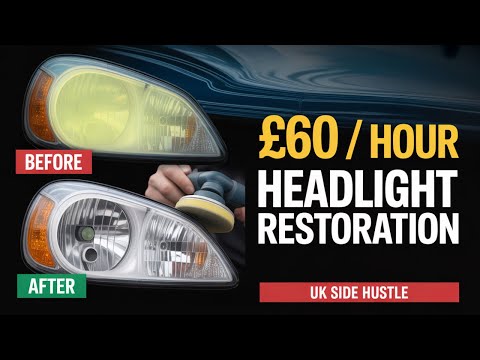
Headlight restoration brings cloudy plastic lenses back to clear on cars parked in streets from Manchester to Bristol. One vehicle takes under an hour once the process feels familiar.
Real UK Business Example
Cazoo Online used car marketplace founded in the UK with inspection centres nationwide. Car finders and sourcers earn fees connecting buyers to undervalued listings.
What is Mobile Headlight Restoration?
It is a driveway service that sands, polishes and seals headlight lenses. Owners skip expensive replacements and gain safer night driving without leaving their postcode.
Video Breakdown
The video shows the grit sequence, compound stages and UV sealant needed for a finish that lasts. Watch the full video on YouTube for the full walkthrough.
Key Takeaways
- Starter kit runs £20–£40.
- Materials per pair cost £2–£4.
- Typical charge sits at £30–£45 for two headlights.
- Most jobs finish inside 45 minutes after a few tries.
- Focus on cars older than five years.
- Work stays mobile with just a folding table and water supply.
Startup Costs in the UK
Expect to reach the first paying customer for roughly £100–£250.
| Item | Approx. Cost (UK) | Notes |
|---|---|---|
| Sandpaper grit set | £8 | Multiple grades from 400 to 2000 |
| Polishing compound | £12 | One tub lasts dozens of cars |
| UV sealant spray | £15 | Essential for weather protection |
| Masking tape and pads | £10 | Everyday consumables |
| Basic electric polisher | £55 | Optional upgrade after first jobs |
Total outlay stays inside £100–£250 for the core kit.
Tools & Equipment Needed
- Progressive sandpaper sheets
- Rubbing compound
- UV-resistant clear coat
- Masking tape and applicator pads
- Drill with polishing attachment (optional at first)
How to Start
- Watch free sanding and polishing tutorials until the sequence is clear.
- Practice on your own car or a scrap headlight from a local breaker yard.
- Buy the entry kit and test on three or four vehicles for friends.
- Register as self-employed with HMRC before taking paid work.
- Print simple A5 flyers and drop them on driveways in your postcode area.
- Contact independent garages in your town for referral work.
- Track every job in a simple spreadsheet for tax records.
Earnings & Scaling
After materials, a £40 job leaves roughly £36 profit. Two cars a day for four days can produce £480 gross before tax and travel. Growth comes from repeat visits to the same streets or van signage that draws calls while parked.
Pros, Cons and Risks
Pros:
- Low entry spend
- Jobs completed in under an hour
- Work from any driveway or car park
Cons:
- Results depend on steady practice
- Weather can push jobs indoors
Risks:
- Over-promising on severely damaged lenses
- Competition from quick mobile washers who skip the UV step
UK-Specific Tips
- Check council rules on trading from the roadside in your area.
- Use free Facebook groups for your postcode to offer same-day slots.
- Carry public liability insurance from day one; quotes start around £8 a month.
- Keep all receipts for fuel and materials for HMRC self-assessment.
FAQ
What tools do I need to get started?
Sandpaper in several grits, compound, UV sealant, masking tape and pads cover the basics. A drill polisher helps later but is not required for the first month.
How much can I earn from this business?
Net margins sit around £35 per car once the kit is paid for. Volume depends on local marketing rather than any fixed figure.
Do I need any special expertise or training?
No formal certificate exists. Consistent practice on scrap lenses builds the skill faster than paid courses.
Where do I find the first customers?
Leaflets through doors in streets with older cars and short posts in local Facebook groups produce the quickest responses.
Conclusion
Headlight restoration suits anyone willing to practise the sanding sequence and knock on doors in their own area. Browse more ideas on MicroBiz365.