House Business: Equipment, Pricing & Leads (UK)
Startup Cost: £50–£300 | Difficulty: Beginner | Time to Start: 7 Days | Business Type: Local
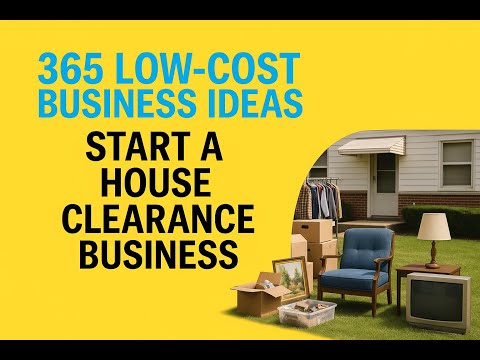
House clearance involves helping families clear out their loved one's home after a passing. This can be a daunting task for the family, but with the right approach, it can also be a profitable business venture.
What is House Clearance Business?
A house clearance business requires empathy, hard work, and attention to detail. You'll help families sort, sell, donate, and recycle personal items to maximise profits.
Video Breakdown
This article is based on a YouTube video that covers the ins and outs of starting a house clearance business. You'll learn about the essential tools and equipment needed, how to develop a system for labelling and inventorying personal items, and how to establish relationships with funeral directors and other key stakeholders.
Watch the full video on YouTube for the full walkthrough.
Key Takeaways
- Starting a house clearance business requires empathy, hard work, and attention to detail.
- Develop a system for labelling and inventorying personal items to maximise profits.
- Establish relationships with funeral directors, priests, community leaders, and real estate agents to get referrals.
- Advertise your services in local obituaries and online platforms to reach potential clients.
Startup Costs in the UK
MicroBiz365 keeps costs under £300; free tools and our PDF where possible. Here's a breakdown of the estimated costs involved in starting a house clearance business in the UK:
| Item | Approx. Cost (UK) | Notes |
|---|---|---|
| Boxes, bags, tape, labels, and other essential tools | £50-£100 | Initial investment for boxes, bags, tape, labels, and other essential tools |
| Branding basics (e.g. logo, business cards) | £0-£40 | Free or low-cost branding basics |
| Contract/template | £0-£50 | Free or low-cost contract/template |
| Other miscellaneous costs | £0-£100 | Other miscellaneous costs (e.g. insurance, marketing) |
In practice, you can get to your first paying client for a total setup spend of roughly £100–£250, well under the £300 mark, then upgrade tools and protection as the business grows. Companies like Purplebricks have shown that a low-cost, efficient approach can be successful in the UK property market.
Tools & Equipment Needed
- Van or large vehicle (optional)
- Boxes, bags, tape, labels, and other essential tools
- Branding basics (e.g. logo, business cards)
- Contract/template
- Other miscellaneous costs (e.g. insurance, marketing)
How to Start
- Develop a system for labelling and inventorying personal items.
- Establish relationships with funeral directors, priests, community leaders, and real estate agents to get referrals.
- Advertise your services in local obituaries and online platforms to reach potential clients.
- Build trust with your clients by handling items with care and respecting their wishes.
- Sort, sell, donate, and recycle items to maximise profits.
Earnings & Scaling
Earnings will vary depending on the number of clients and the value of items cleared. With a focus on providing a compassionate service, you can build a loyal client base and increase your earnings over time.
Pros, Cons and Risks
Pros:
- Opportunity to make a difference in your community
- Potential for decent earnings
- Flexibility to work on your own schedule
Cons:
- Emotionally demanding work
- Physical demands of lifting and clearing heavy items
- Initial investment in equipment and marketing
Risks:
- Damage to property or items during clearance
- Difficulty in finding clients and building a loyal customer base
- Competition from established companies
UK-Specific Tips
- Register with HMRC as a sole trader or limited company
- Obtain necessary insurance to protect yourself and your business
- Comply with UK laws and regulations regarding waste disposal and data protection
FAQ
What kind of insurance do I need?
You'll need liability insurance to protect yourself and your business in case of accidents or damage to property.
How do I find clients?
Establish relationships with funeral directors, priests, community leaders, and real estate agents to get referrals. Advertise your services in local obituaries and online platforms to reach potential clients.
What kind of equipment do I need?
You'll need boxes, bags, tape, labels, and other essential tools to clear and sort items. A van or large vehicle may be necessary for larger clearances.
Conclusion
Starting a house clearance business can be a rewarding and profitable venture. With the right approach and equipment, you can provide a compassionate service to families in need and build a successful business. For more ideas, browse more ideas on MicroBiz365.