UK Grant Writing Service for UK Funding Applications: Pricing, Kit & Getting Clients
Startup Cost: £50–£250 | Difficulty: Intermediate | Time to Start: 7–14 Days | Business Type: Remote
One Manchester founder started by rewriting a single rejected community grant on her kitchen table. The group received £18,000. Word spread through two local Facebook groups and three more jobs followed within a month.
Real UK Business Example
BiP Solutions Runs Supply2Gov tender-alert tools helping UK SMEs find public-sector contracts. Freelance bid writers pair with alerts for council frameworks.
What is Grant Writing Service for UK Funding Applications?
Grant writing means researching public funds, matching them to client projects and submitting structured applications to councils, national programmes and trusts. Clients are usually small businesses, charities and community groups that lack time or in-house expertise.
Video Breakdown
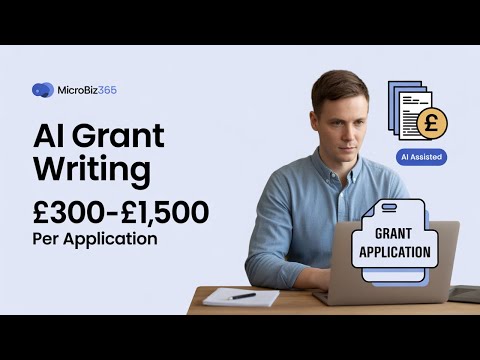
The video shows where to locate live UK grant rounds, how to price packages and how to use AI without producing robotic text that gets rejected. Watch the full video on YouTube for the full walkthrough.
Key Takeaways
- Many UK grants receive fewer applications than expected because groups struggle with the paperwork.
- Focus on three local authority areas first rather than chasing every national fund.
- AI speeds research and first drafts but every figure, date and eligibility claim must be checked manually.
- Start with a fixed fee of £450–£650 per bid for groups under 10 staff.
- Success rate improves when you specialise in one sector such as community energy or youth projects.
- Pair your service with tender alerts from BiP Solutions to spot repeat funders.
Startup Costs in the UK
Everything needed fits comfortably under £300.
| Item | Approx. Cost (UK) | Notes |
|---|---|---|
| Laptop or existing computer | £0–£50 | Use what you already own |
| Domain and basic site | £15–£40 | One-year hosting and .co.uk domain |
| Contract template | £20–£40 | Simple service agreement from a solicitor template |
| Canva Pro trial or free tier | £0–£13 | Branded PDFs for proposals |
| LinkedIn Premium month | £25–£30 | Targeted outreach to local groups |
| Misc printing and travel | £20 | First client meetings |
Total spend lands between £100 and £250 before the first invoice arrives.
Tools & Equipment Needed
- Reliable laptop and internet
- Free or low-cost AI writing tool for drafts
- Simple contract template
- Spreadsheet for tracking deadlines and requirements
- Basic branded proposal template
How to Start
- Register as self-employed with HMRC in under ten minutes.
- Pick two postcodes and list every live grant on the local council site plus national portals.
- Write one sample application using public information to test your process.
- Create a one-page service sheet showing fixed prices and turnaround times.
- Contact five community groups via email or LinkedIn with a short, specific offer.
- Send the contract and invoice only after the client confirms the grant round.
- Deliver the bid, request feedback and ask for a testimonial if successful.
Earnings & Scaling
Most new writers complete two to four applications per month at £450–£750 each. After six months a steady client base of eight to ten groups can produce £3,000–£5,000 monthly before tax, though results vary with effort and location.
Pros, Cons and Risks
Pros:
- Work entirely from home with flexible hours.
- Low running costs once initial tools are bought.
- Clear value when a client receives funding.
Cons:
- Income is lumpy until a regular pipeline exists.
- Rejections are common and clients may blame the writer.
- Deadlines cluster around quarterly funding rounds.
Risks:
- Submitting inaccurate information can damage client relationships and your reputation.
- Some grants require specialist knowledge that takes time to learn.
- Competition increases when large agencies enter local markets.
UK-Specific Tips
- Keep records for HMRC self-assessment; note every hour spent on each bid.
- Join your local chamber or CVS network for warm introductions.
- Never promise success rates above 30 percent in writing.
- Check client eligibility yourself before quoting; many applications fail at this stage.
FAQ
Do I need qualifications?
No formal certificate is required, but clients prefer evidence of past successful bids.
How long does one application take?
Most straightforward bids need 8–15 hours spread over two to three weeks.
Can I work only with local groups?
Yes. Many founders start inside one county and expand once reviews appear.
What happens if the grant is rejected?
Offer a discounted resubmission or move the client to the next suitable round.
Conclusion
Grant writing rewards clear writing and persistence more than big budgets. Start small, track every outcome and browse more ideas on MicroBiz365.